
Finding Cave Spring Residents by Record
Cave Spring is an unincorporated Census Designated Place and community-planning area in Roanoke County, not an independent city. Start in county systems, even when a mailing address says Roanoke. The county administrative center is in Cave Spring, but Salem is the county seat and the Circuit Clerk keeps the land and court files there. That distinction prevents a common wrong turn into City of Roanoke portals, which serve a separate jurisdiction.
A Cave Spring residents directory is a trail rather than one public roster. WebPro ties an owner to a parcel. VoterView gives polling and district details for a selected owner, address, or parcel. The Clerk's records show parties to instruments, and historical shelves can put a former household at an earlier address. Renters and other household members may not appear in a property record, so each result needs its own date and purpose.
- Search WebPro by owner name, street, street number, or parcel number. Save the parcel ID, physical parcel address, called the situs address, owner line, sale reference, and inspection date.
- Open the county map or VoterView with that address or parcel. Confirm the selected parcel before treating polling or district details as relevant.
- When a transfer matters, use the Clerk's approved Secure Remote Access, or SRA, account or call the Salem counter for the land-record route. Record the instrument type and legal description that identifies the land.
- For an older household, test Roanoke, Salem, and Vinton directory labels at the Virginia Room, South County Library, or a historical repository.
- When a county record is not online, request the existing record with enough detail to identify it, such as a parcel number, date range, or file type.
Note: An owner name, a voter address, and a directory entry are separate records, not interchangeable proof of present residence.
Cave Spring Residents Directory Offices
Roanoke County offices supply the core current records for Cave Spring residents. The Circuit Clerk holds deeds, plats, probate material, court files, and marriage records. Real Estate Valuation and GIS handle the assessment and parcel side. Elections administers local voter access. Each office answers a narrower question than a general people list, which makes the record role important.
Roanoke County Circuit Court Clerk
305 E Main Street, 2nd Floor
Salem, VA 24153
540-387-6205
Real Estate Valuation
Roanoke County assessment and parcel records
Countywide service for Cave Spring parcels
540-772-2035
The Clerk counter accepts file-copy requests by appointment and should be called when a historical image or court file is not visible online. Real Estate Valuation can explain assessment fields. Elections can explain voter-status and list-request procedures without disclosing protected data.
Cave Spring County Records Map
Place labels need a jurisdiction check. The Census Cave Spring CDP had 26,755 people in 2020, while the county's 2024-2038 Cave Spring Community Planning Area covers about 5,150 acres, 6,659 parcels, and about 15,060 people. Those are different boundaries. Neither figure is a list of residents, and neither should be used to assign a record to an address without checking the parcel and locality.
Roanoke County formed in 1838, and Salem has remained the county seat. Roanoke City became independent in 1968. Older directories, newspaper references, or deed citations can therefore use a place name that differs from a modern Cave Spring mailing label. Parcel ID, legal description, and source date provide a better bridge than a place name alone.
Cave Spring WebPro Parcel Searches
Roanoke County's free WebPro search is the strongest starting point for a current Cave Spring parcel. It accepts a parcel number, owner, situs street name, street number, building type, ranges for year built, beds, baths, lot size, finished area, value, sale price, sale date, and a book-plus-page reference. Last name alone is often the simplest owner search because results display surnames first. The form has no visible ZIP control.
| WebPro search field | How it works | Useful Cave Spring result |
|---|---|---|
| Owner | Optional surname or prefix-style search | Finds tax-roll owner names in surname-first form |
| Street name and number | Optional situs-address fields | Targets a parcel or a stretch of a Cave Spring street |
| Parcel | Optional tax-map identifier | Uses the county format 000.00-00-00.00-0000 |
| Sale date or book and page | Optional date range or paired reference | Connects an assessment lead to a land-record search |
| Value, size, type, or land use | Optional filters | Narrows a property search without identifying an occupant |
The Roanoke County WebPro advanced search shows the actual field layout used for Cave Spring parcel work.
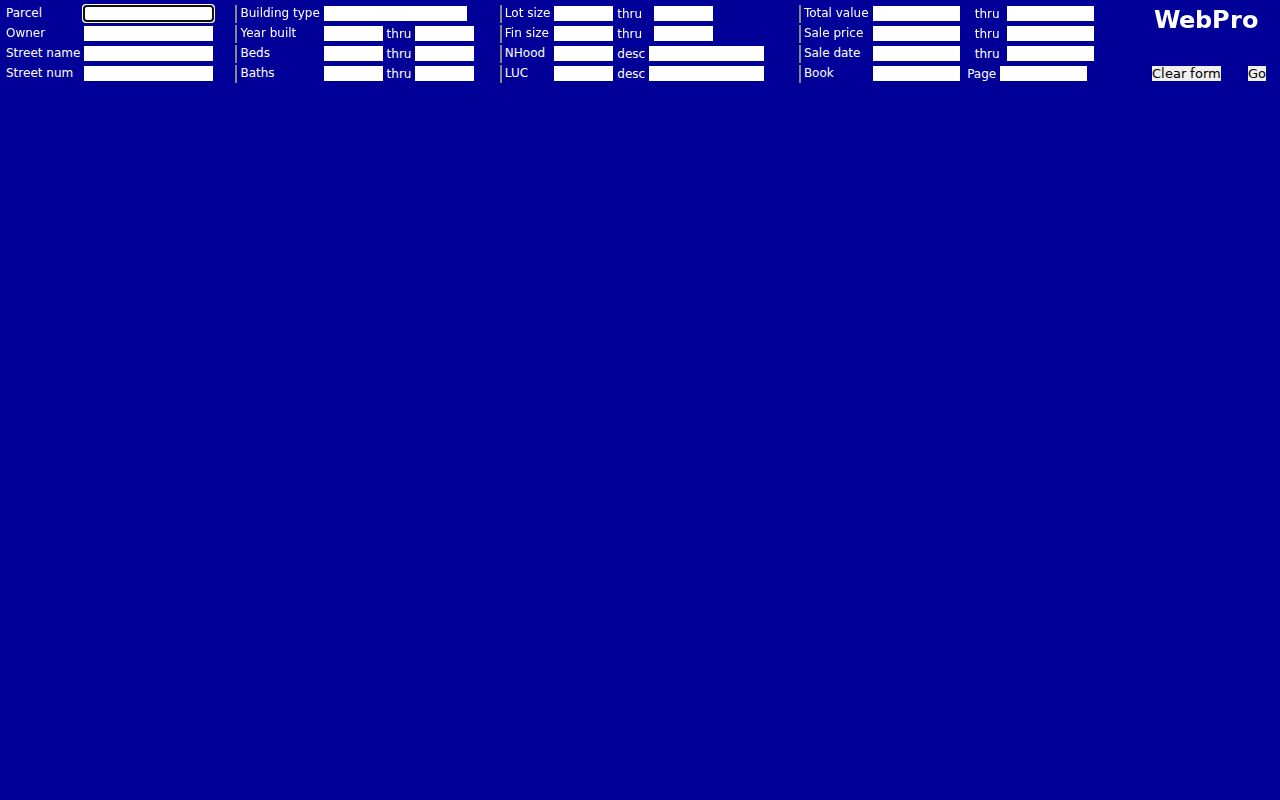
Its result controls sort by details such as parcel ID, location, owner, value, sale, and book page. Open the parcel ID before relying on a displayed row, because the county notes that data from different sources can be updated at different times.
Cave Spring Parcel Card Details
WebPro's parcel card separates land facts from household facts. A typical result can show a parcel ID, location, owner, build year and type, total value, bedrooms and baths, lot or finished area, land-use code, neighborhood code, sale date and price, and a legal book-page reference. Those fields make a good record inventory because they identify what the county actually assessed or indexed.
- Parcel
- A county tax-map identifier for a piece of land. It is often more durable than a street label.
- Situs address
- The physical location of the parcel. GIS, permits, and property searches use this address.
- Mailing address
- The address where the tax roll sends correspondence. It can differ from the parcel and is not proof of current residence.
- Index
- A searchable list that points to a record. An index entry is not always the underlying image or a certified copy.
- Land-use code
- An assessment classification, such as the code applied to a parcel. It is not a civic-neighborhood membership label.
A mailing address may belong to an owner, estate, company, or tax-service address away from Cave Spring. A situs address says where the parcel sits. Assessment data also does not establish who receives mail there or who is part of a household. Keep the owner role and the property location distinct.
Cave Spring VoterView Address Check
County VoterView is an address and parcel tool, not an open by-name roster of every voter. Search by owner name, address, or parcel number, or select a location on the map. The returned tabs provide polling-place and elected-official information for the selected location. The state Voter Information Portal is the separate route for an individual's registration status.
The Roanoke County VoterView makes the address-first distinction visible.
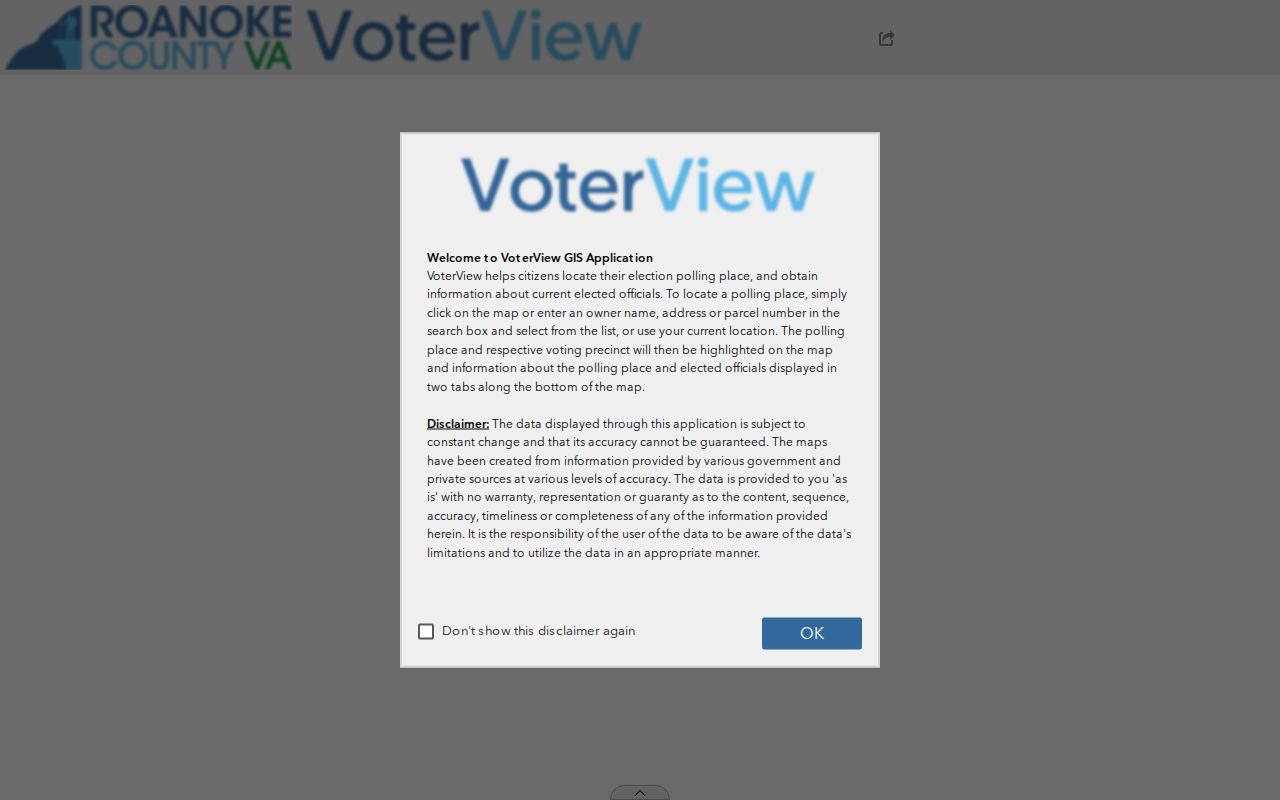
Virginia law allows inspection of specified voter-list fields, including name, residence address, year of birth, gender, and election districts, while withholding sensitive fields. A county owner result does not show that the owner votes at the parcel, and a polling-place result does not reveal ballot choices.
Note: Use the state status portal only with the identifying information it requests, and do not try to infer information protected by election law.
Current Cave Spring Residents Directory Sources
Current records have different coverage. The property roll is best for a recorded owner and parcel facts. VoterView is best for an address's polling context. The Clerk index establishes a role in a recorded instrument. State systems can identify a person in a particular regulated, custody, or entity record, but none is a universal Cave Spring resident list.
| Current source | What it can confirm | Record keeper | Access route |
|---|---|---|---|
| WebPro property roll | Owner, parcel, situs, assessment, sales reference | Roanoke County Real Estate Valuation | Free web search and county assistance |
| VoterView | Selected address or parcel polling and district details | Roanoke County Elections | Free address, owner, parcel, or map lookup |
| Land records | Parties to deeds, plats, liens, and related instruments | Roanoke County Circuit Clerk | Approved paid SRA, counter, or archive |
| Court and probate files | Case or estate role when a matching public file exists | Circuit Clerk and Virginia courts | Individual court portals, counter, or copies |
| State entity and license records | Public filing or credential role | Virginia agencies | Official statewide search systems |
For a one-person question, compare a matching name with a parcel, date, middle initial, or legal description before drawing a conclusion. The Cave Spring resident lookup route focuses on that verification work.
Cave Spring Official Record Comparisons
An official record starts with the office that created or keeps it. A commercial people-finder report may combine public filings, address history, marketing data, and purchased data into one paid result. That can be a lead, but stale records and same-name merges are common. The original custodian remains the source to check when a name or address matters.
| Record route | Strength | Limit to remember |
|---|---|---|
| County property or deed record | Names the property or instrument role and source date | Owner or party status is not the same as household membership |
| Voter or court custodian | Applies the relevant public-access rules | Protected fields and restricted cases remain unavailable |
| Commercial compiled report | May offer a broad starting lead | Can be stale, incomplete, costly, or merged across people |
Cave Spring Deed Index Access
The Roanoke County Circuit Clerk's land-record index reaches from 1838 to the present. Deeds, deeds of trust, satisfactions, powers of attorney, plats, easements, and other instruments can connect a parcel to parties and a legal description. Remote Secure Remote Access, called SRA, requires an application, agreement, Clerk approval, login, and paid account. The minimum listed term is $125 for three months.
That price buys remote convenience, not a different category of record. Older books, grantor-grantee indexes, plats, and surveyors' books can be examined through the Clerk or the Library of Virginia's Roanoke County microfilm guide. The unauthenticated SRA screen did not reveal its post-login field set, so a careful searcher should not assume filters that were not published.
For a parcel trail, use WebPro's sale or book-page reference to choose a date, then look for the buyer as grantee and the seller as grantor. A deed may identify a transfer without proving where either party lived. Instrument type and legal description matter, especially when a name belongs to an estate, trustee, or company.
Cave Spring VFOIA Record Requests
Virginia Freedom of Information Act, or VFOIA, provides a county fallback when an existing record is not in a public portal. Roanoke County accepts requests through JustFOIA as well as email, fax, mail, phone, or an in-person request. No special phrase is required. Describe the existing record with reasonable specificity, such as a parcel number, address, file type, subject, or date range. An agency does not have to create a new list or answer a research question.
The Roanoke County public-records request route explains the local channel under Va. Code §§2.2-3700 et seq. The usual response period in §2.2-3704 is five working days, with defined responses and limited additional time in specified circumstances. Actual search, retrieval, and copying costs can apply, and confidentiality statutes still control protected voter, vital, DMV, and address information.
County records can also be obtained through the human route. Call the Clerk for land or court files, call Real Estate Valuation for an assessment field, or call Elections for status and voter-list procedure. For older material, the South County Library, Virginia Room, HSWV, and Library of Virginia provide different archive paths.
Cave Spring Court and Vital Records
Virginia court access is organized by individual court rather than one universal countywide search. A matching name may appear in the Roanoke County Circuit Court or General District Court portals, while the Juvenile and Domestic Relations Court, sealed matters, adoption records, and other protected files have limits. The Clerk counter can confirm whether a local file is held on site and explain copy procedures. A court index is a lead, not a complete case file.
The Virginia Department of Health vital-record application route is the statewide path for certified birth, death, marriage, and divorce records. Under Va. Code §32.1-271, birth records open after 100 years; death, marriage, and divorce records open after 25 years. Before those periods, immediate-family eligibility and direct or tangible-interest rules apply. The Circuit Clerk handles marriage licenses and court-held divorce files, while VDH is the certificate custodian.
Local health departments can assist with some vital-record applications. When an older record has reached its opening period, inspect the historical index or certificate through the channel the custodian specifies. A certificate, a marriage license, and a court divorce file are related records with different keepers and access rules.
Cave Spring Public Safety Records
Custody and public-safety systems are separate from the property trail. Virginia DOC NAAVI searches state custody records by name, county, or DOC ID. A local jail inquiry is a different county system, and the Virginia registry is another official record. A no-result in one system does not settle what another system contains. Record the selected system, locality, and search date.
The Virginia DOC NAAVI search is the state custody and offender-status route.

NAAVI accepts a partial-name wildcard and should not be confused with the Roanoke County and Salem Jail Division inquiry. Call the jail docket at 540-283-3162 if the local online inquiry is unavailable.
The Virginia Sex Offender and Crimes Against Minors Registry offers name, address, ZIP, county, and map searches.
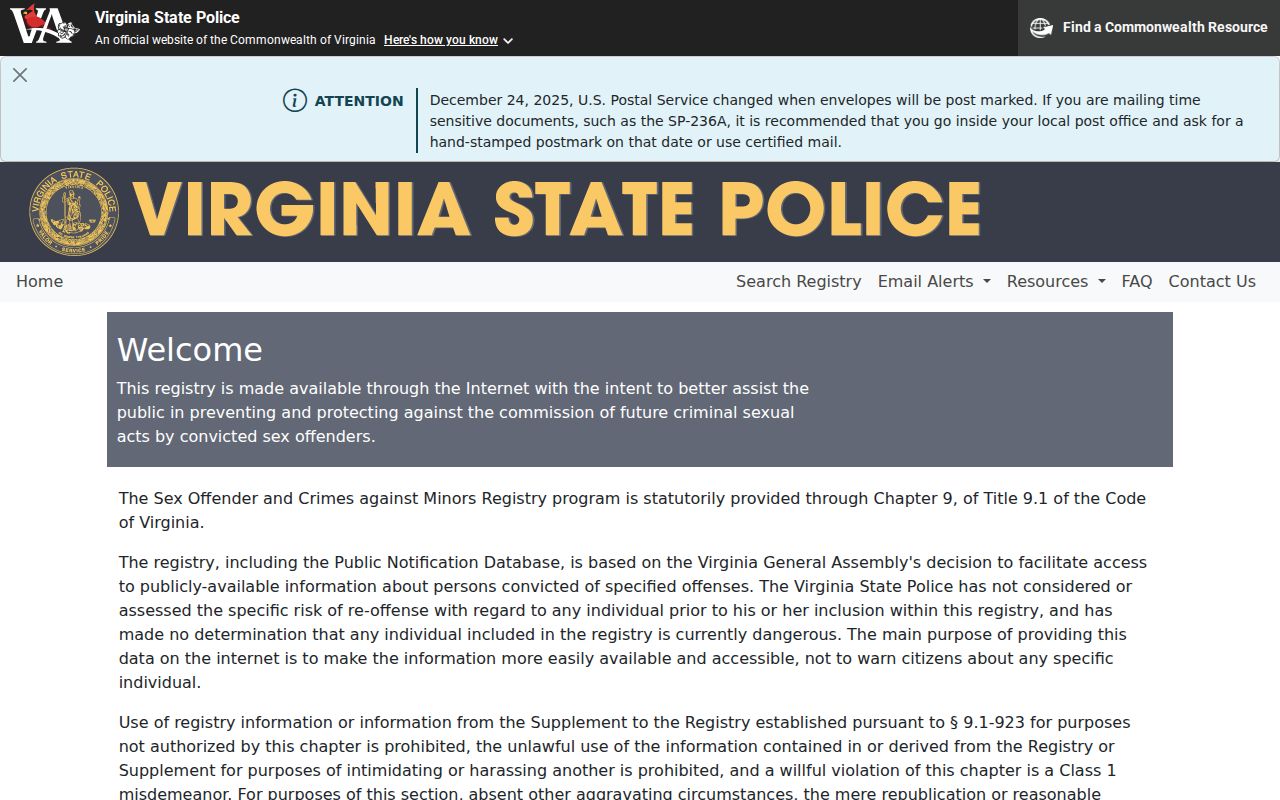
Registry information is limited to what the Virginia State Police posts, and the registry warns against harassment or intimidation. Verify the listed address and record date with the official system before relying on a match.
Cave Spring Business Record Searches
A business filing can identify a company, registered agent, status, or filing image without establishing a personal home address. The Virginia State Corporation Commission Clerk's Information System covers corporations, limited liability companies, partnerships, business trusts, registered agents, offices, and filings. A company role is best treated as a business-record lead, then checked against the filing date and entity status.
The Virginia SCC entity search is the statewide public filing route.
Use the entity ID and available filing images to separate a Cave Spring business connection from a claim about personal residence. Other official license searches, including DPOR and DHP, likewise show a regulated-record status rather than a full resident directory.
Historical Cave Spring Residents Directory Sources
No verified standalone Cave Spring printed directory run was located. Historical searches instead use the broader Roanoke, Salem, and Vinton directory environment, where a Cave Spring household may be listed under a neighboring municipal or post-office label. The Virginia Room holds Roanoke City directories from 1888 forward as a series, while online directory aids list many Roanoke, Salem, and Vinton years. Always record the printed jurisdiction and edition.
South County Library offers a nearby microfilm reader, free scans to email or flash drive, and interlibrary-loan help. The Virginia Room adds directories, maps, newspaper indexes, family material, and staff research assistance. For broader historical material, HSWV preserves regional family, neighborhood, cemetery, map, photograph, and business collections, while the Library of Virginia holds county deed and marriage microfilm.
A directory entry may put a person at an address in a particular year and can include a listed role, business association, or telephone convention. It does not prove a modern address. The Cave Spring city directory collection route gives the historical shelf and year-by-year method more room.
Cave Spring Records From 1838
Roanoke County's 1838 formation is also the starting year for the Clerk's deed and land index. That long index is useful, but it should not be confused with complete online images. Several SRA series have images beginning in 2001 even where the index reaches much further back. LVA's grantor-grantee microfilm guide supplies a practical historical fallback, including deed indexes from 1838 to 1923 and other county reels.
County history gives the record trail a useful boundary check. The early courthouse suffered moisture damage, was demolished in 1908, and was replaced in 1910. Official history does not support a story that a courthouse fire erased the county's deeds. Surviving Clerk coverage and LVA reels are the reliable evidence when an old record is needed.
Recent record protection has a different purpose. In March 2026, the Clerk announced free voluntary VADeed Alert enrollment, which matches a subscriber's name or tax-map parcel number to newly recorded documents. The alert can flag a new recording, but it does not stop recording or validate an instrument. Check the deed record and contact the Clerk when an alert needs follow-up.
Note: A nineteenth-century index date marks a starting point for searching, not a promise that every record image can be viewed remotely.