
Finding Cave Spring Residents by Record
Cave Spring is not an independent city. It is an unincorporated Census Designated Place and a community-planning area inside Roanoke County. County systems hold the records. A Roanoke mailing address changes nothing. Salem is the county seat, and its Circuit Clerk keeps the land and court files there, even though the county administrative center sits in Cave Spring. The right portals belong to Roanoke County, not the City of Roanoke's separate jurisdiction.
A Cave Spring residents directory works as a trail, not one public roster. WebPro ties an owner to a parcel. VoterView adds polling and district details for a selected owner, address, or parcel. Clerk records name the parties to an instrument. Historical collections can trace past residents to earlier addresses. Renters and other household members may never appear in a property record, so give each result its own date and purpose.
- Search WebPro by owner name, street, street number, or parcel number. Save the parcel ID, physical parcel address, called the situs address, owner line, sale reference, and inspection date.
- Open the county map or VoterView with that address or parcel. Confirm the selected parcel before treating polling or district details as relevant.
- When a transfer matters, use the Clerk's approved Secure Remote Access, or SRA, account or call the Salem counter for the land-record route. Record the instrument type and legal description that identifies the land.
- For an older household, test Roanoke, Salem, and Vinton directory labels at the Virginia Room, South County Library, or a historical repository.
- When a county record is not online, request the existing record with enough detail to identify it, such as a parcel number, date range, or file type.
Note: An owner name, a voter address, and a residents directory entry are separate records, and none alone proves present residence at a Cave Spring address. Match each record to its own date.
Cave Spring Residents Directory Offices
Roanoke County offices supply the core current records behind a Cave Spring residents directory. Real Estate Valuation and GIS handle parcels and assessment. Elections administers local voter access. The Clerk covers the widest ground. In Salem, the Circuit Clerk keeps deeds, plats, probate material, court files, and marriage records, and each office answers a narrower question than a general people list.
Roanoke County Circuit Court Clerk
305 E Main Street, 2nd Floor
Salem, VA 24153
540-387-6205
Real Estate Valuation
Roanoke County assessment and parcel records
Countywide service for Cave Spring parcels
540-772-2035
Call the Clerk counter when a historical image or court file is not visible online, since it takes file-copy requests by appointment. Real Estate Valuation can explain any assessment field. Elections explains list-request procedures without releasing protected data.
Cave Spring County Records Map
Check the jurisdiction behind any place label. The Census counted 26,755 people in the 2020 Cave Spring CDP, while the county's 2024-2038 planning area spans about 5,150 acres, 6,659 parcels, and roughly 15,060 people. Those boundaries do not match. Neither figure is a resident list. Neither should assign a record to an address without a parcel and locality check.
History complicates names too. Roanoke County formed in 1838, and Salem has held the county seat ever since. Roanoke City went independent in 1968. Older directories, newspaper references, and deed citations may therefore carry a place name that no modern Cave Spring mailing label matches. A parcel ID, legal description, and source date bridge old and new far better than a name.
Cave Spring WebPro Parcel Searches
Roanoke County's free WebPro search is the strongest starting point for a current Cave Spring parcel. It accepts a parcel number, owner, situs street name, street number, and building type. Ranges cover year built, beds, baths, lot size, finished area, value, sale price, sale date, and a book-plus-page reference. Last name alone is often simplest. Results display surnames first. The form shows no visible ZIP control.
| WebPro search field | How it works | Useful Cave Spring result |
|---|---|---|
| Owner | Optional surname or prefix-style search | Finds tax-roll owner names in surname-first form |
| Street name and number | Optional situs-address fields | Targets a parcel or a stretch of a Cave Spring street |
| Parcel | Optional tax-map identifier | Uses the county format 000.00-00-00.00-0000 |
| Sale date or book and page | Optional date range or paired reference | Connects an assessment lead to a land-record search |
| Value, size, type, or land use | Optional filters | Narrows a property search without identifying an occupant |
The Roanoke County WebPro advanced search shows the field layout for Cave Spring parcel work.

Result controls sort by parcel ID, location, owner, value, sale, and book page. Open the parcel ID itself. Because the county updates different sources at different times, a displayed row is never the final word.
Cave Spring Parcel Card Details
A WebPro parcel card separates land facts from household facts. A typical card lists a parcel ID, location, owner, build year and type, total value, bedrooms and baths, lot or finished area, land-use code, neighborhood code, sale date and price, and a book-page legal reference. That long field list is the point. It inventories exactly what the county assessed. Nothing on the card names who lives there.
- Parcel
- A county tax-map identifier for a piece of land. It is often more durable than a street label.
- Situs address
- The physical location of the parcel. GIS, permits, and property searches use this address.
- Mailing address
- The address where the tax roll sends correspondence. It can differ from the parcel and is not proof of current residence.
- Index
- A searchable list that points to a record. An index entry is not always the underlying image or a certified copy.
- Land-use code
- An assessment classification, such as the code applied to a parcel. It is not a civic-neighborhood membership label.
A mailing address may belong to an owner, estate, company, or tax service far from Cave Spring. A situs address says where the parcel sits. Assessment data establishes neither who receives mail there nor who belongs to the household. Owner and location are different facts.
Cave Spring VoterView Address Check
County VoterView works by address and parcel, not as an open by-name roster of every voter. Search by owner name, address, or parcel number, or click a spot on the map. Returned tabs show polling places and elected officials. The state Voter Information Portal handles individual registration status.
The Roanoke County VoterView page shows the address-first design.
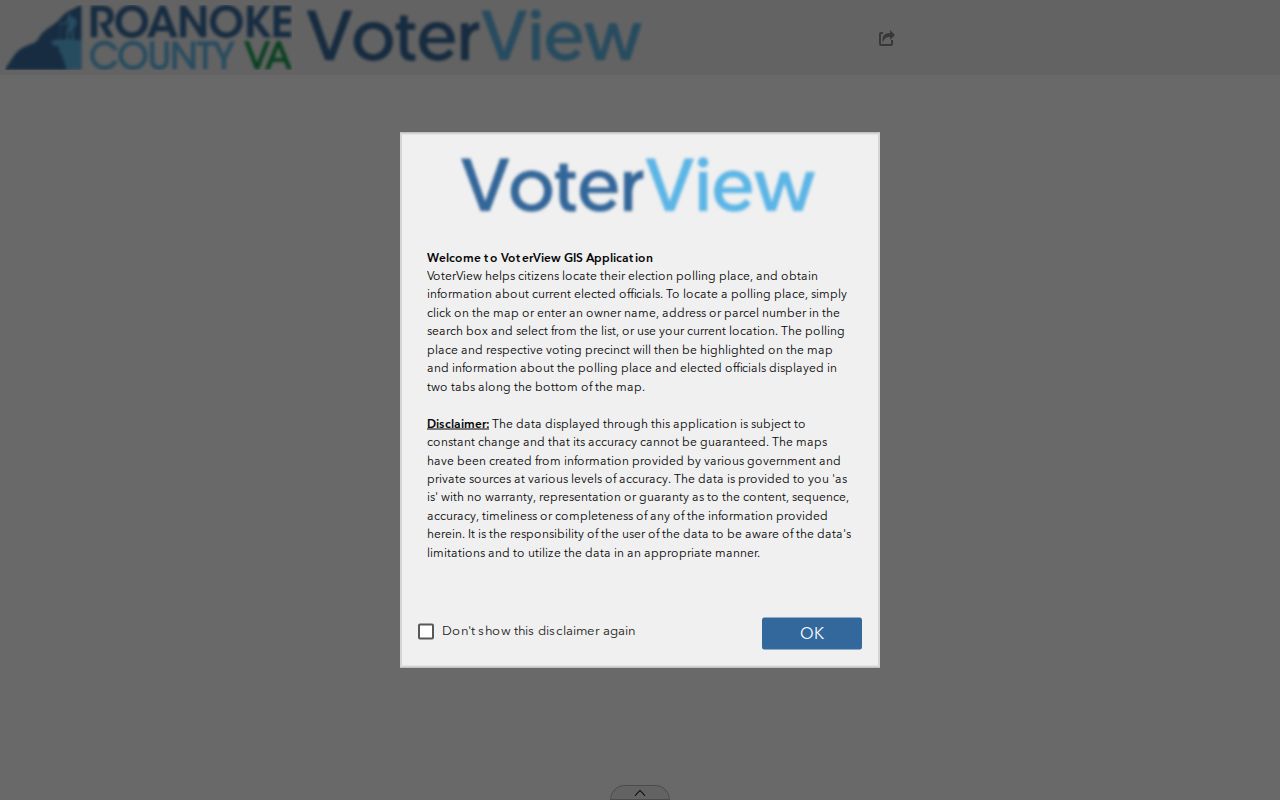
Virginia law opens specified voter-list fields to inspection. Those include name, residence address, year of birth, gender, and election districts. Sensitive fields stay withheld. A county owner result does not show that the owner votes at the parcel. A polling-place result says nothing about ballot choices.
Note: Use the state status portal only with the identifying details it requests, and never try to infer what election law protects.
Current Cave Spring Residents Directory Sources
No single current source lists every household in Cave Spring. The property roll leads for a recorded owner and parcel facts. VoterView leads for an address's polling context. The Clerk index shows a person's role in a recorded instrument. State systems cover regulated, custody, and entity records. Each answers only its own question. A Cave Spring residents directory takes piecing together from several offices rather than one master resident list.
| Current source | What it can confirm | Record keeper | Access route |
|---|---|---|---|
| WebPro property roll | Owner, parcel, situs, assessment, sales reference | Roanoke County Real Estate Valuation | Free web search and county assistance |
| VoterView | Selected address or parcel polling and district details | Roanoke County Elections | Free address, owner, parcel, or map lookup |
| Land records | Parties to deeds, plats, liens, and related instruments | Roanoke County Circuit Clerk | Approved paid SRA, counter, or archive |
| Court and probate files | Case or estate role when a matching public file exists | Circuit Clerk and Virginia courts | Individual court portals, counter, or copies |
| State entity and license records | Public filing or credential role | Virginia agencies | Official statewide search systems |
Names repeat in Cave Spring more than you might expect. Before trusting a match, weigh a parcel number, a date, a middle initial, or a legal description against it. The Cave Spring resident lookup route concentrates on that verification step.
Cave Spring Official Record Comparisons
Every official record has an office that created it. Commercial people-finder reports work differently. They blend public filings, address history, marketing lists, and purchased data into a single paid result, which can serve as a lead. Stale entries and same-name merges show up often, though. When a name or address truly matters, go back to the original custodian of the record.
| Record route | Strength | Limit to remember |
|---|---|---|
| County property or deed record | Names the property or instrument role and source date | Owner or party status is not the same as household membership |
| Voter or court custodian | Applies the relevant public-access rules | Protected fields and restricted cases remain unavailable |
| Commercial compiled report | May offer a broad starting lead | Can be stale, incomplete, costly, or merged across people |
Cave Spring Deed Index Access
The Roanoke County Circuit Clerk's land-record index reaches from 1838 to the present. Deeds, deeds of trust, satisfactions, powers of attorney, plats, and easements all tie a parcel to its parties. The same instruments fix its legal description. Remote access runs through Secure Remote Access, or SRA. It requires an application, an agreement, Clerk approval, a login, and a paid account. The minimum listed term is $125 for three months. That fee buys convenience, not a different class of record.
Older books, grantor-grantee indexes, plats, and surveyors' books remain viewable through the Clerk. They are also viewable through the Library of Virginia's Roanoke County microfilm guide. The SRA login screen publishes no list of its search filters. Confirm what fields exist after access rather than assuming them.
For a parcel trail, start with WebPro's sale or book-page reference to fix a date. Then look for the buyer as grantee and the seller as grantor. A deed proves a transfer, not where either party lived. Instrument type carries the weight. So does the legal description, especially when a name belongs to an estate, trustee, or company.
Cave Spring VFOIA Record Requests
Virginia's Freedom of Information Act, or VFOIA, works as a fallback when a record sits outside any public portal. Roanoke County accepts requests through JustFOIA, email, fax, mail, phone, or a walk-in. No magic wording is needed. Describe the existing record with reasonable specificity: a parcel number, address, file type, subject, or date range. An agency will not build a new list or answer a research question for you.
The Roanoke County public-records request route explains the local channel under Va. Code §§2.2-3700 et seq. Section 2.2-3704 sets the usual response period at five working days, with defined responses and limited extra time in specified circumstances. Search, retrieval, and copying costs can apply. Confidentiality statutes still protect voter, vital, DMV, and address information.
The human route still works. Call the Clerk for land or court files. Call Real Estate Valuation for an assessment field. Call Elections for status and voter-list procedure. Older material follows different archive paths through the South County Library, the Virginia Room, HSWV, and the Library of Virginia.
Cave Spring Court and Vital Records
Virginia organizes court access by individual court, not by one countywide search. A matching name may surface in the Roanoke County Circuit Court portal. It may also appear in the General District Court portal. The Juvenile and Domestic Relations Court, sealed matters, adoptions, and other protected files carry limits. The Clerk counter can confirm whether a local file sits on site. The counter can also explain copy procedures. Treat a court index as a lead, never as the full case.
The Virginia Department of Health vital-record application route is the statewide path. It covers certified birth, death, marriage, and divorce records. Under Va. Code §32.1-271, birth records open after 100 years. Death, marriage, and divorce records open after 25 years. Before those periods, immediate-family eligibility and direct or tangible-interest rules govern access. The Circuit Clerk keeps marriage licenses and court-held divorce files. VDH remains the certificate custodian.
Local health departments can assist with some applications. Once a record reaches its opening period, inspect it through the channel the custodian specifies. A certificate, a marriage license, and a divorce file are related records. Each has a different keeper and different rules.
Cave Spring Public Safety Records
Custody and public-safety records sit apart from the property trail. Virginia DOC NAAVI searches state custody records by name, county, or DOC ID. A local jail inquiry is a separate county system. The Virginia registry is yet another official record. A no-result in one system settles nothing about another. So note the system, locality, and search date you used. The Virginia DOC NAAVI search is the state custody and offender-status route.

NAAVI takes a partial-name wildcard. Do not confuse it with the Roanoke County and Salem Jail Division inquiry. Call the jail docket at 540-283-3162 if the local online inquiry is down. The Virginia Sex Offender and Crimes Against Minors Registry offers name, address, ZIP, and county searches. It also has a map search.
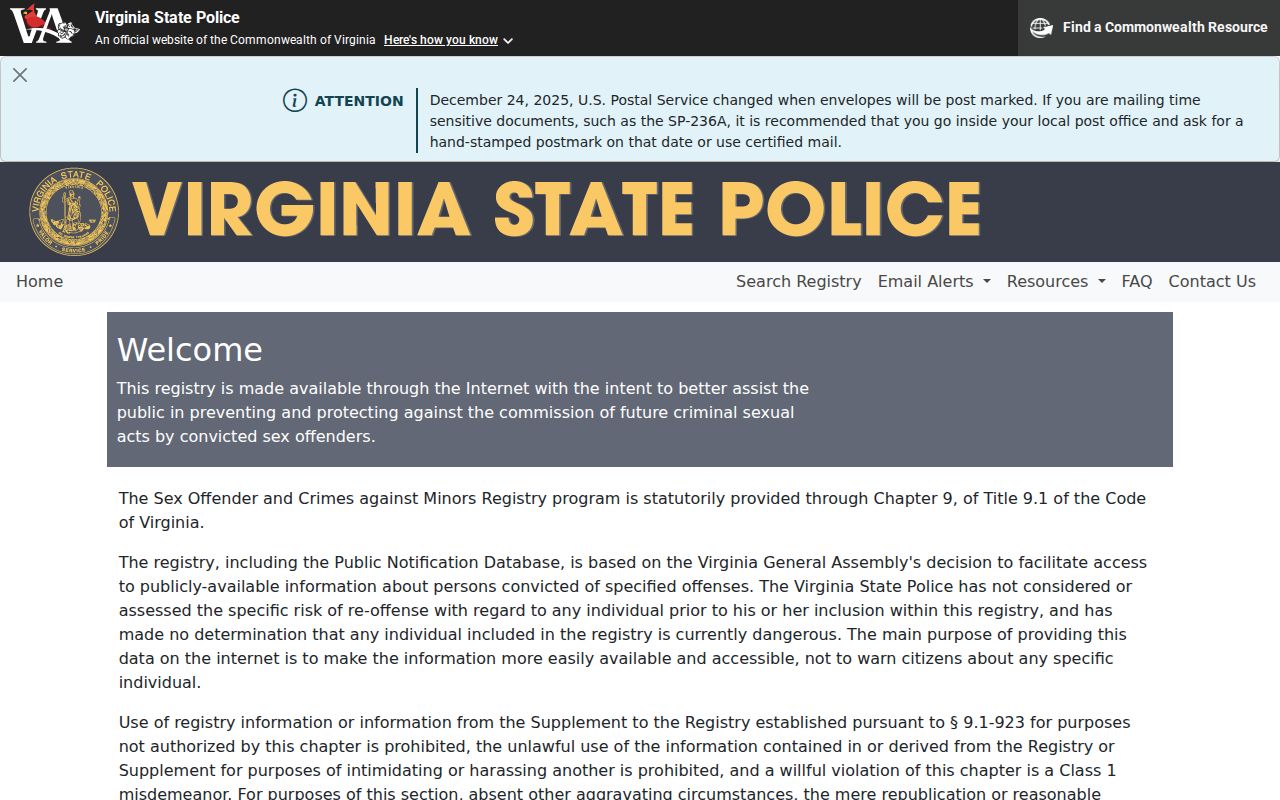
The registry holds only what the Virginia State Police publishes. Its own notice warns against using the listings for harassment or intimidation. Before treating any entry as a match, confirm the address and record date against the official system itself.
Cave Spring Business Record Searches
A business filing names a company, its registered agent, its status, and its filing images. What it will not do is fix a personal home address. The Virginia State Corporation Commission Clerk's Information System spans corporations, limited liability companies, partnerships, business trusts, registered agents, offices, and filings statewide. Treat any company role as a lead. Then check it against the filing date and current entity status. The Virginia SCC entity search is the public filing route for the whole state.
An entity ID plus the filing images help separate a genuine Cave Spring business tie from an assumption about where someone lives. The same caution applies to other official license lookups. DPOR and DHP searches, for example, report a regulated-record status rather than a full resident directory.
Historical Cave Spring Residents Directory Sources
Cave Spring has no verified standalone printed directory run of its own. Historical searches lean on the wider Roanoke, Salem, and Vinton directory environment. A Cave Spring household may sit under a neighboring municipal or post-office label. The Virginia Room keeps Roanoke City directories from 1888 forward as a continuous series. Online directory aids list many Roanoke, Salem, and Vinton years. Always record the printed jurisdiction and the edition you used. South County Library offers a nearby microfilm reader. It provides free scans to email or flash drive, and interlibrary-loan help. The Virginia Room adds directories, maps, newspaper indexes, family material, and staff research assistance. For wider historical material, HSWV preserves regional family, neighborhood, cemetery, map, photograph, and business collections. The Library of Virginia holds county deed and marriage microfilm. A directory entry can place a person at an address in a given year. It may also list a role, business association, or telephone convention. It does not prove a modern address. The Cave Spring city directory route gives the historical shelf more room. It also gives the year-by-year method more room to breathe.
Cave Spring Records From 1838
Roanoke County formed in 1838. That same year opens the Clerk's deed and land index. The index runs long, but do not mistake it for complete online images. Several SRA series only have images dating to 2001. The index reaches much deeper in places. LVA's grantor-grantee microfilm guide offers a practical fallback. It lists deed indexes from 1838 to 1923 and other county reels. County history gives the record trail a boundary check. The early courthouse took moisture damage. It was demolished in 1908, and gave way to a 1910 replacement. Official history does not support the tale of a courthouse fire erasing the county's deeds. When an old record matters, surviving Clerk coverage and LVA reels are the reliable evidence. Recent record protection serves a different purpose. In March 2026 the Clerk announced free voluntary VADeed Alert enrollment. It matches a subscriber's name or tax-map parcel number to newly recorded documents. An alert can flag a new recording. It cannot stop one, and it does not validate an instrument. When an alert needs follow-up, check the deed record and contact the Clerk. Note: A nineteenth-century index date marks a starting point for searching. It is not a promise that every image is viewable remotely.